

While it may not suit every asset or organization, when used correctly, DDB provides a strategic advantage, especially for high-usage or fast-depreciating assets. It is important to understand that although the charging of depreciation affects the net income (and therefore the amount attributable to shareholders) of a business, it does not involve the movement of cash. No actual cash is put aside, the accumulated depreciation account simply reflects that funds will be needed in the future to replace the fixed assets double declining balance depreciation formula which are reducing in value due to wear and tear. When implementing the double declining balance method (DDB) as a depreciation technique, it’s important to consider mid-year adjustments. The DDB method typically assumes that an asset is put into service at the start of the year and that the full year’s depreciation is recorded in the first year.
How to Calculate Units of Activity or Units of Production Depreciation
- The “double” means 200% of the straight line rate of depreciation, while the “declining balance” refers to the asset’s book value or carrying value at the beginning of the accounting period.
- This not only provides a better match of expense to the car’s usage but also offers potential tax benefits by reducing taxable income more significantly in those initial years.
- It’s also important to note that some depreciation methods factor salvage values into their calculations, but the double declining balance method ignores it.
- This is usually when the net book value of the fixed asset is below the minimum value that asset is required to be capitalized (which should be stated in the fixed asset management policy of the company).
- Recovery period, or the useful life of the asset, is the period over which you’re depreciating it, in years.
- One such method is the Double Declining Balance Method, an accelerated depreciation technique that allows for a more significant portion of an asset’s cost to be expensed in the earlier years of its life.
Due to the accelerated depreciation expense, a company’s profits don’t represent the actual results because the depreciation has lowered its net income. Depreciation rates between the two methods of calculating depreciation are similar except that the DDD Rate is twice the value of the SLD rate. In the depreciation of the asset for each period, the salvage value is not considered when doing calculations for DDD balance. Double declining balance depreciation is a type of declining balance depreciation in which the depreciation expense in the early year is bigger than in the later years.
How Much Does Bookkeeping Cost? Compare Models & Services
This cost allocation is not a cash expense but rather a mechanism for matching the asset’s expense with the revenue it generates over its service period. The Double Declining Balance (DDB) method is one specific, accelerated approach to this allocation. Here, you divide the cost unearned revenue of the asset minus its salvage value by the number of years it’s expected to be useful. For example, if you buy a piece of equipment for $10,000 and expect it to last 10 years with no salvage value, you’ll charge $1,000 to depreciation each year. Each year, as your assets get older and less efficient, their value decreases.
Benefits of the Double Declining Balance Method
In many countries, the Double Declining Balance Method is accepted for tax purposes. However, it is crucial Insurance Accounting to note that tax regulations can vary from one jurisdiction to another. Therefore, businesses should verify the specific tax rules and regulations in their region and consult with tax experts to ensure compliance. Yes, it is possible to switch from the Double Declining Balance Method to another depreciation method, but there are specific considerations to keep in mind.
- Using the rate from the calculation above, the declining balance depreciation for each of the 4 years is as follows.
- Each year, you depreciate the asset by a fraction that has the remaining life of the asset as the numerator.
- If, for example, an asset is purchased on 1 December and the financial statements are prepared on 31 December, the depreciation expense should only be charged for one month.
- ABC Limited purchased a Machine costing $12500 with a useful life of 5 years.
- To record the depreciation expense each year for this asset, we enter a journal entry that debits Depreciation Expense $4,000 and credits Accumulated Depreciation $4,000.
- Consider a machine purchased for $10,000 with a useful life of 5 years and no salvage value.

In the last year, ignore the formula and take the amount of depreciation needed to have an ending Net Book Value equal to the Salvage Value. At the beginning of the second year, the fixture’s book value will be $80,000, which is the cost of $100,000 minus the accumulated depreciation of $20,000. When the $80,000 is multiplied by 20% the result is $16,000 of depreciation for Year 2. Our solution has the ability to record transactions, which will be automatically posted into the ERP, automating 70% of your account reconciliation process. From double-declining to month-end reporting, see how AI makes accounting smarter.
- We handle the hard part of finding the right tax professional by matching you with a Pro who has the right experience to meet your unique needs and will handle filing taxes for you.
- Variable-declining balance uses the double-declining factor but also initiates the automatic switch to straight-line depreciation once that is greater than double-declining.
- At the end of 4 years the net book value is 1,296 which equals the salvage value of the asset.
- Additionally, it allows companies to potentially reduce their taxable income during an asset’s early years, but compliance with tax regulations is crucial.
- However, accelerated depreciation does not mean that the depreciation expense will also be higher.
- If you’re not sure how to do it, it’s okay to ask a bookkeeper or an accountant for help.
Processing
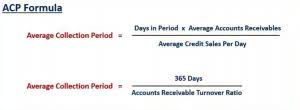
Over the depreciation process, the double depreciation rate remains constant and is applied to the reducing book value each depreciation period. The term “double” in the double-declining balance depreciation comes from the determining of deprecation rate to be twice of the straight-line rate. In other words, the depreciation rate in the double-declining balance depreciation method equals the straight-line rate multiplying by two.

With DDB, you depreciate the asset at double the annual rate you would with the straight-line method. Instead of spreading the cost evenly over its life, you front-load the expenses. This reflects that some assets are most useful, and therefore lose value more rapidly, in their initial years. Using depreciation in your accounting allows you to match up the cost of the asset with the revenue it helps generate.
Geen reacties